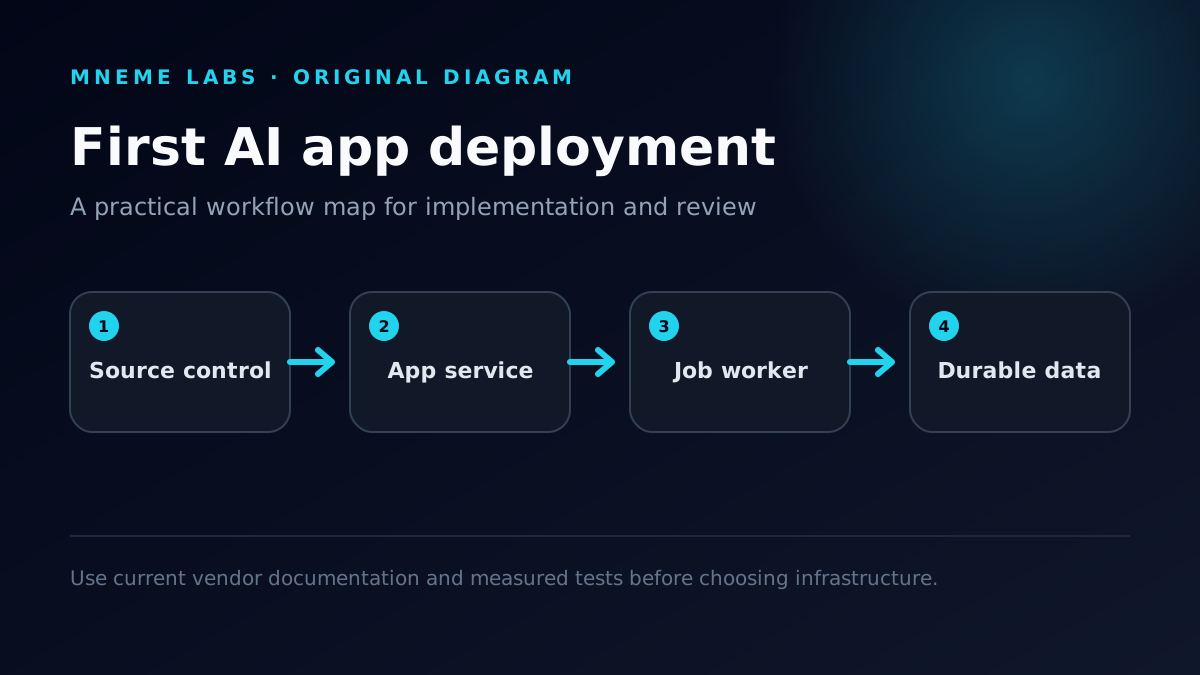
The first deployment of an AI app should prove that another person can use it reliably. It does not need a giant cloud diagram. DigitalOcean can provide an approachable path through a managed app platform or a conventional server, but the smallest correct architecture still needs security, durable state, and a recovery plan.
This is a deployment framework. A step-by-step DigitalOcean tutorial with screenshots will follow after a controlled build is completed and documented.

Decide what the app actually serves
Separate the interface from the expensive AI operation. The public web app may accept text, a file, or a job configuration. The model may run in the same environment for a small CPU workload, through an external API, or on a separate GPU worker.
Write down:
- what input the user provides;
- where that input is stored;
- which model or service processes it;
- how long the work can take;
- where the result is stored;
- how the user learns that it finished;
- when inputs and outputs are deleted.
If those answers are unclear locally, hosting will not clarify them.

Choose managed deployment or a server
A managed app platform can handle much of the build, routing, TLS, and deployment process. That reduces the amount of operating-system work a beginner must own. A virtual server provides more control but also makes patching, firewall configuration, process supervision, and recovery your responsibility.
Choose control only when the application needs it. Running familiar server commands is not automatically simpler than using a managed service once production maintenance is included.
Make the application reproducible
The application should build from version control with pinned dependencies and documented runtime requirements. Local files outside the repository should not secretly determine whether production starts.
Keep secrets out of source control. Configure API keys, database credentials, and signing secrets through the deployment environment. Verify that client-side code never receives server-only secrets.

Add a durable job boundary
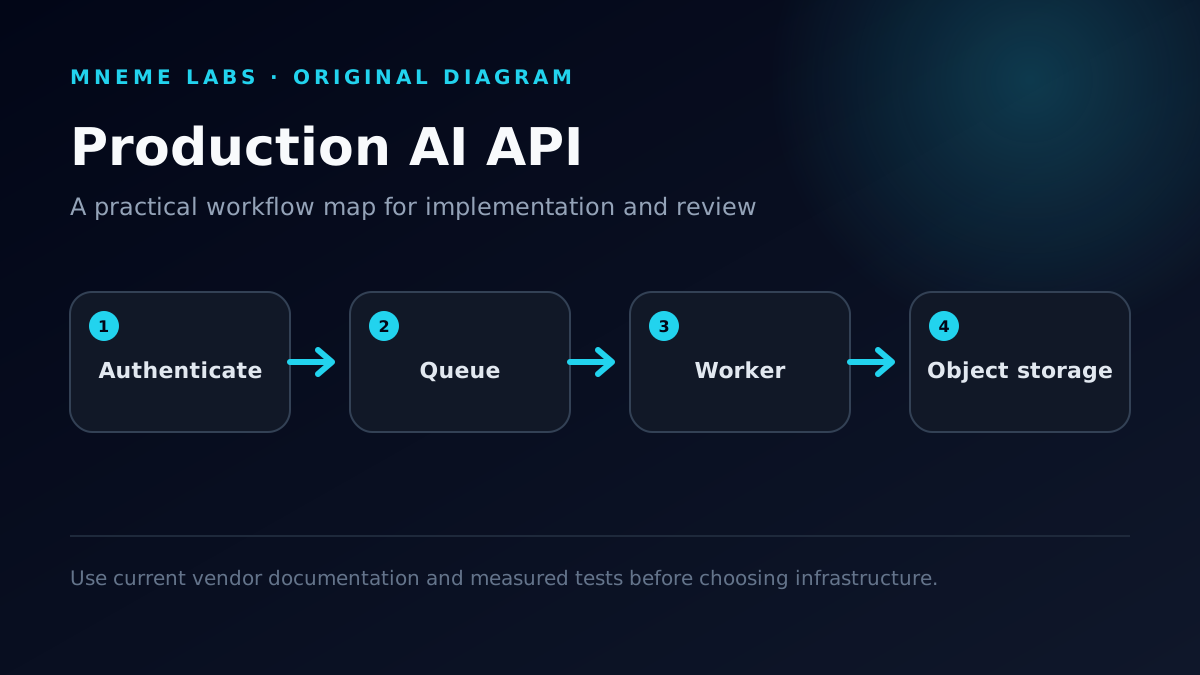
Short model calls can sometimes run during a request, but longer work should become a job. The API validates the request, records a job ID, and returns. A worker processes the job and updates status.
This makes timeouts and retries manageable. The user can see queued, running, completed, or failed instead of staring at a spinner with no idea whether a second click will duplicate work.
Protect the public surface
At minimum, consider authentication, authorization, rate limits, input-size limits, file-type validation, abuse prevention, and clear error messages. A public AI endpoint without limits can turn someone else’s traffic into your bill.
Do not rely on hidden URLs as access control. Do not execute uploaded files. Do not place arbitrary user content into shell commands or prompts without validation appropriate to the system.
Add logs and health checks
Use structured logs with request and job IDs. Record errors and timing without leaking private inputs or secrets. A health endpoint should tell the platform whether the app is ready to receive traffic.

Track the measurements that affect the user: request failures, queue age, job duration, external API failures, and storage growth. CPU usage alone does not explain why a user’s job waited twenty minutes.
Plan data and backups
Decide which data is durable and which is temporary. A database needs backups and tested restoration. Uploaded source files and generated outputs need retention rules. Temporary job artifacts should expire instead of accumulating forever.
Schema changes require migrations and rollback thinking. A successful application build does not guarantee the new code understands the existing database.
Deploy the smallest useful version
A sensible first milestone might include:
- One application service with TLS.
- One managed database or carefully operated database service.
- One job queue and worker if inference is long-running.
- Environment-managed secrets.
- Health checks, structured logs, and basic alerts.
- Rate limits and user quotas.
- A documented rollback and restore test.
You do not need Kubernetes to prove a small AI app. Add components only when evidence shows that the current architecture cannot meet the workload.
Measure before scaling
Track active users, jobs, job duration, failures, storage, bandwidth, and cost per completed result. Scale the layer that is actually constrained. The web app may remain small while workers expand, or model calls may dominate cost while hosting barely changes.

The first deployment is successful when it produces trustworthy information about real usage and can fail without losing control of data or spend.
Continue with the DigitalOcean decision guide, the Vultr production checklist, or the complete AI infrastructure map.