Google Drive to Cloud GPU: An rclone Pipeline for AI Video Jobs
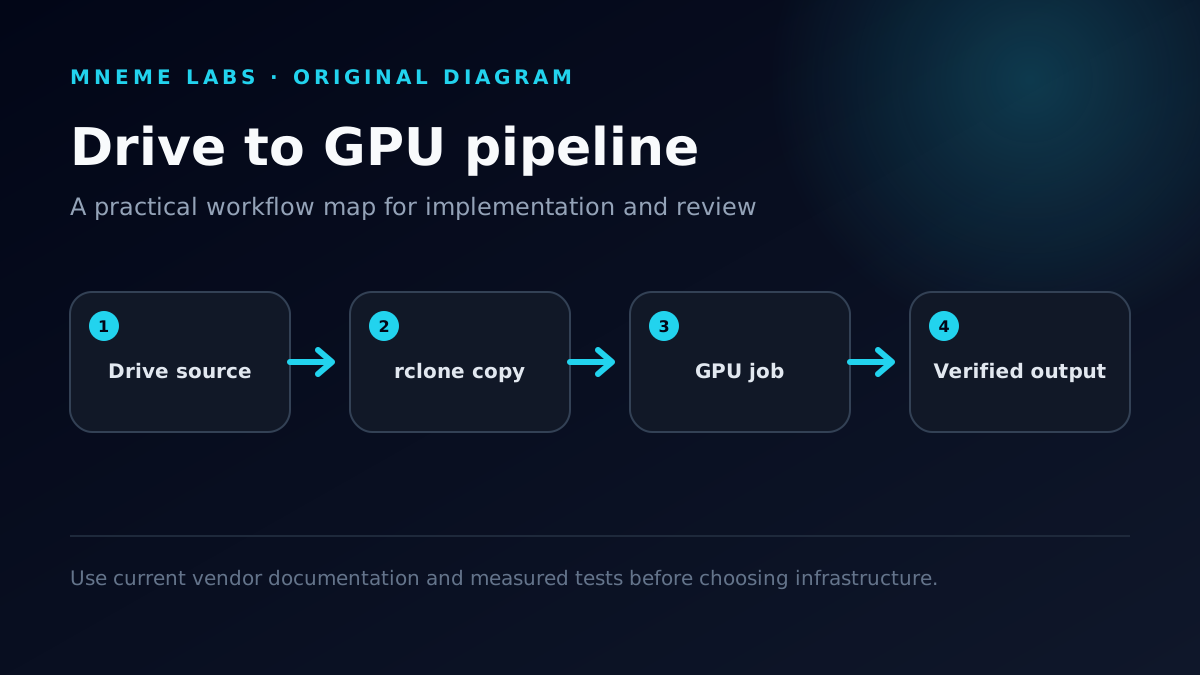
Move footage from Google Drive to a rented GPU and back with rclone: your own client ID, headless auth, scoped remotes, upload limits, and a verified job.
Mneme Labs
Creative Claw, local AI workflows, game development, and the systems we build around real projects.
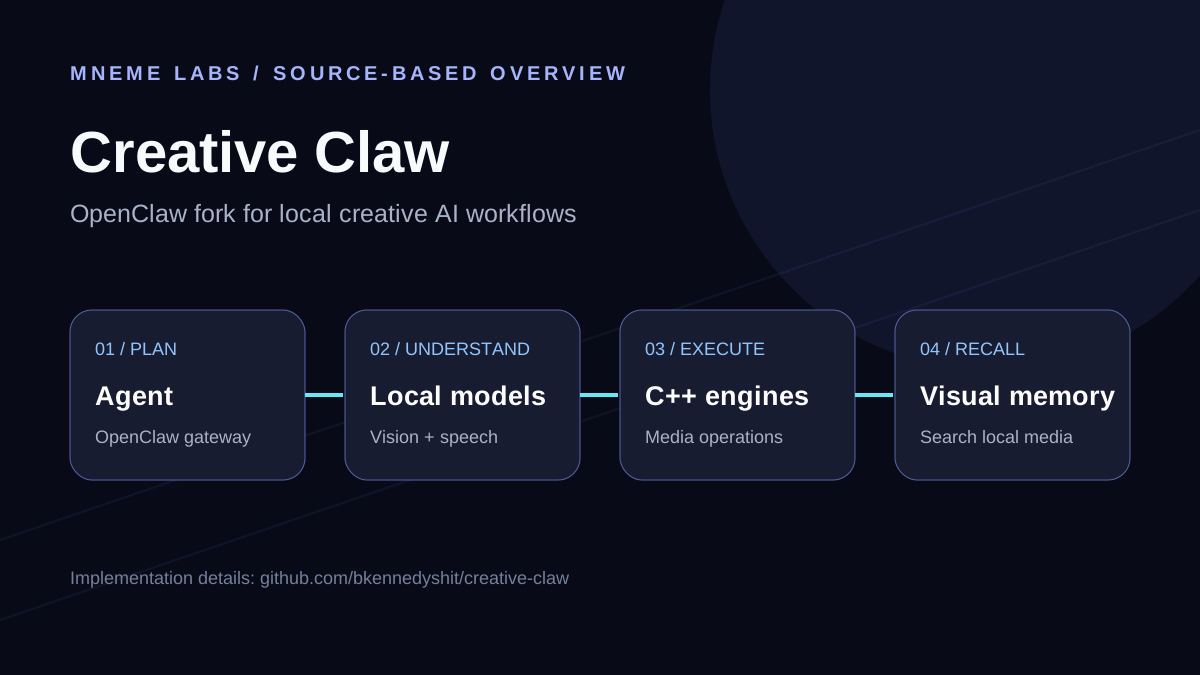
How the fork joins local perception, native media processing, visual memory, and the hardware needed to run them.
Read the overview →Series / Private AI & cloud GPU
Move footage from Google Drive to a rented GPU and back with rclone: your own client ID, headless auth, scoped remotes, upload limits, and a verified job.
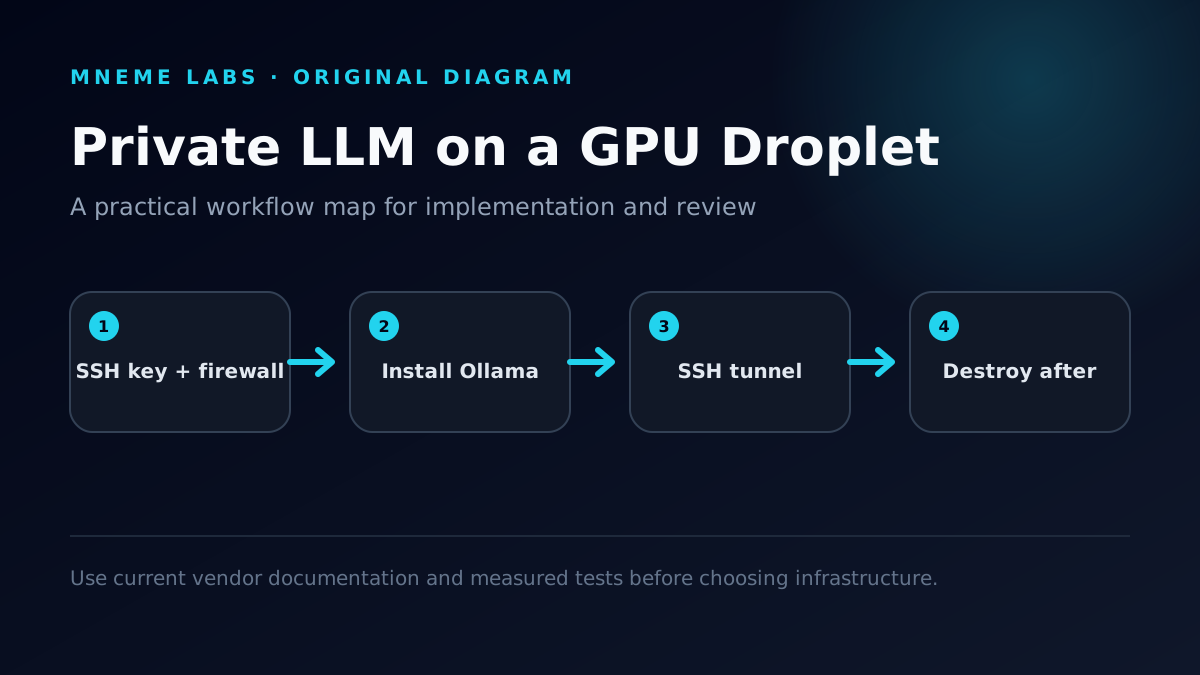
Deploy Ollama on a DigitalOcean GPU Droplet: size by VRAM, keep the API private over SSH, script a rebuild, and avoid the powered-off billing trap.
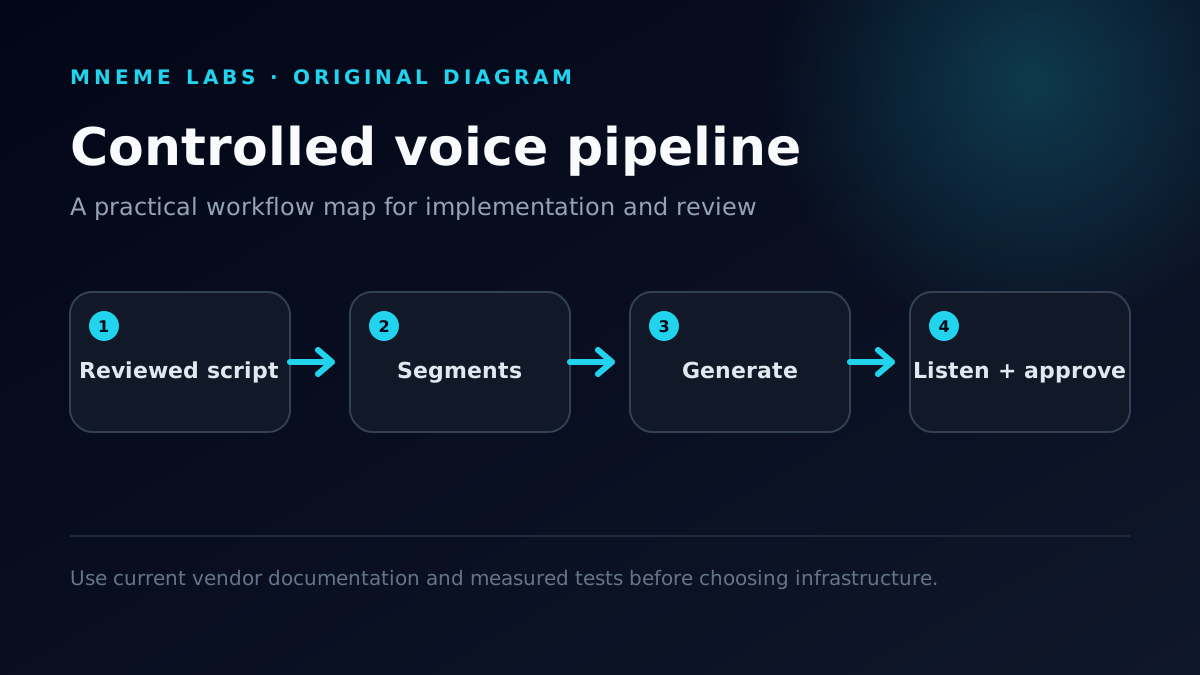
A production workflow for scripts, consent, pronunciation, segment regeneration, audio review, and automated narration.
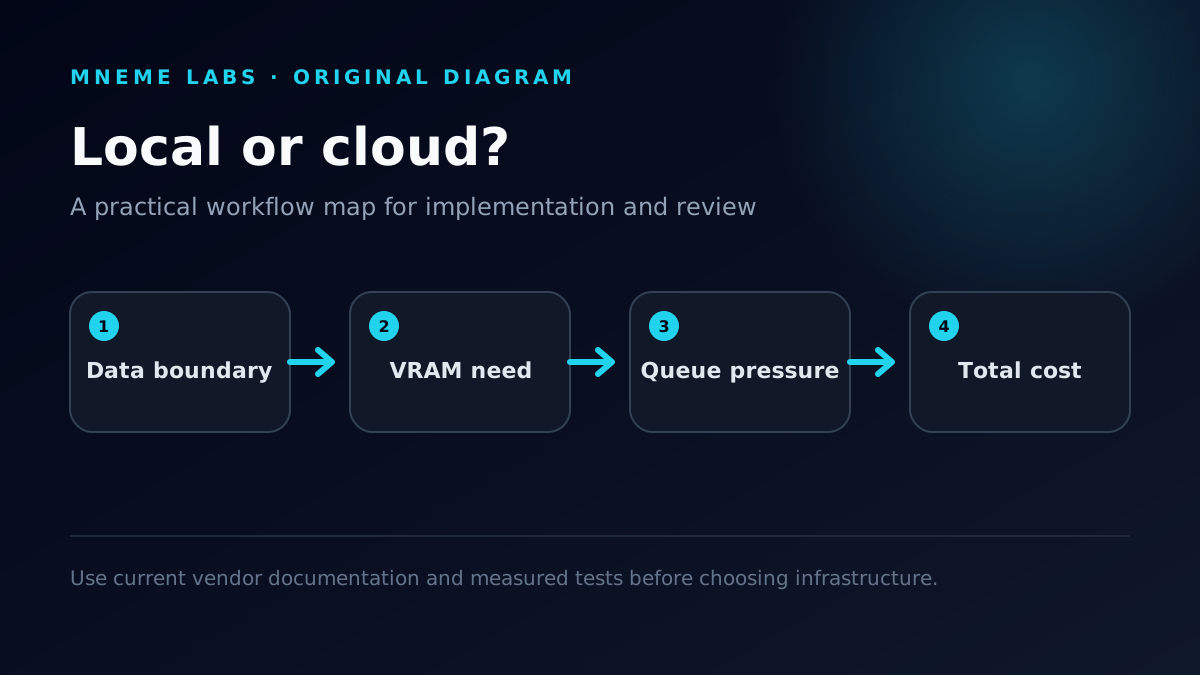
A practical framework for deciding when to own compute, when to rent it, and which hidden costs belong in the comparison.
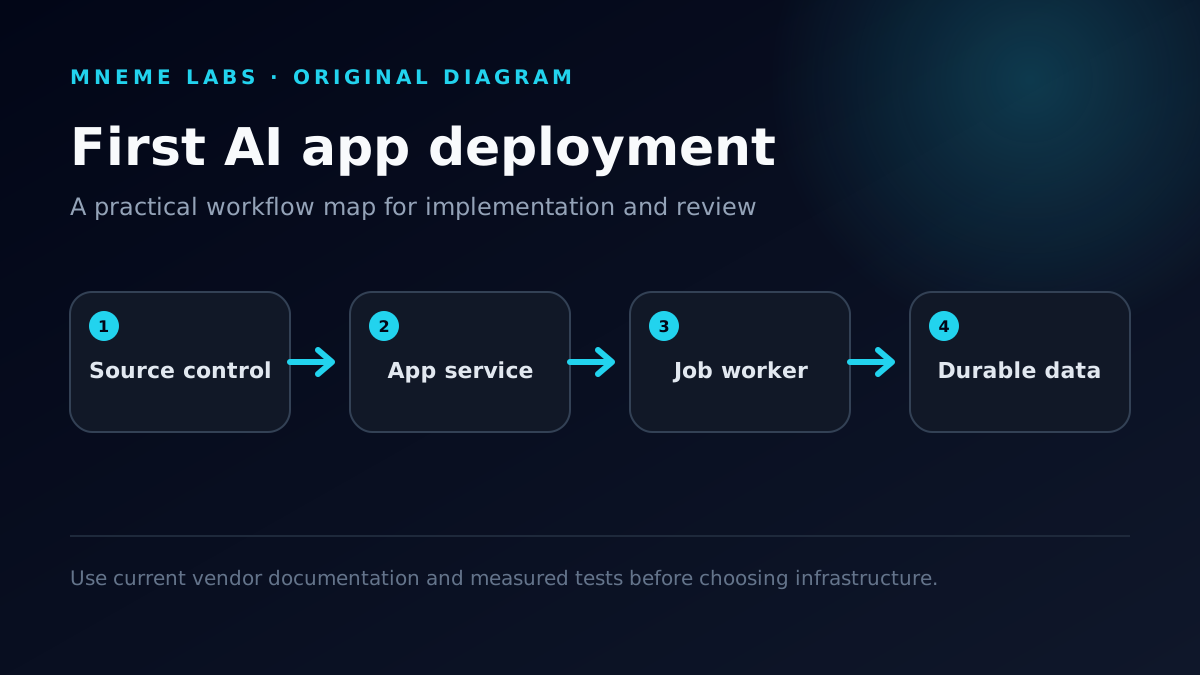
A beginner-friendly path from a working local AI app to a secure public deployment with jobs, logs, limits, and rollback.
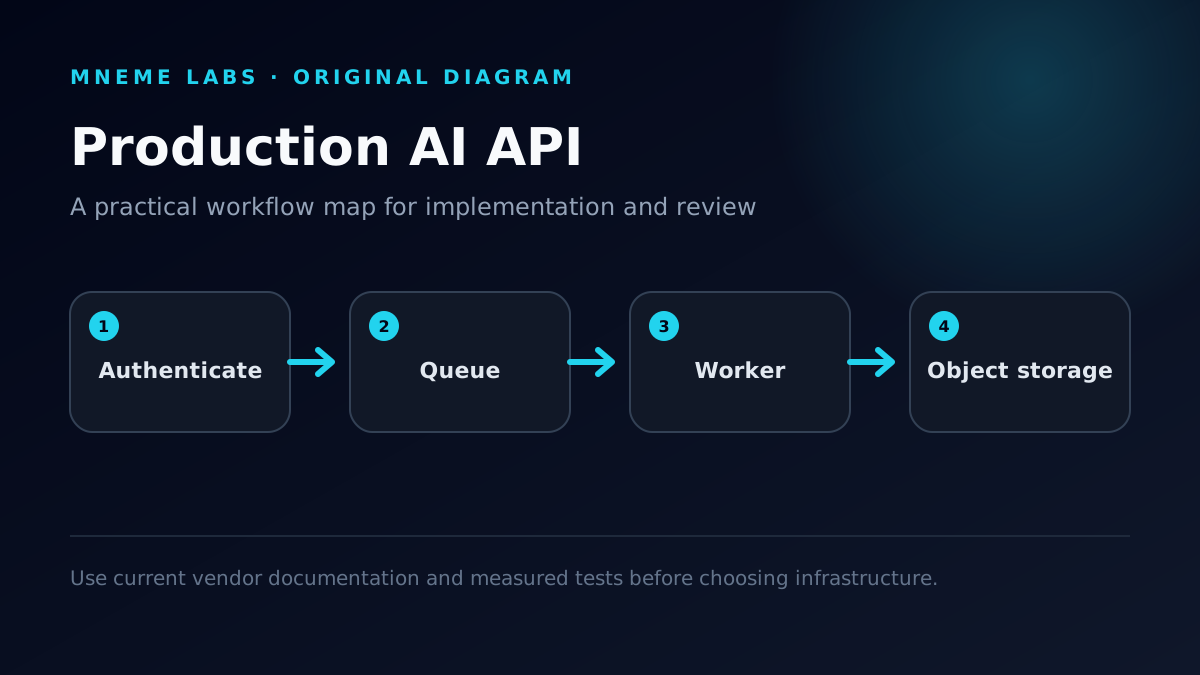
A production checklist for hosting AI APIs and agent services: queues, secrets, health checks, rate limits, backups, and recovery.
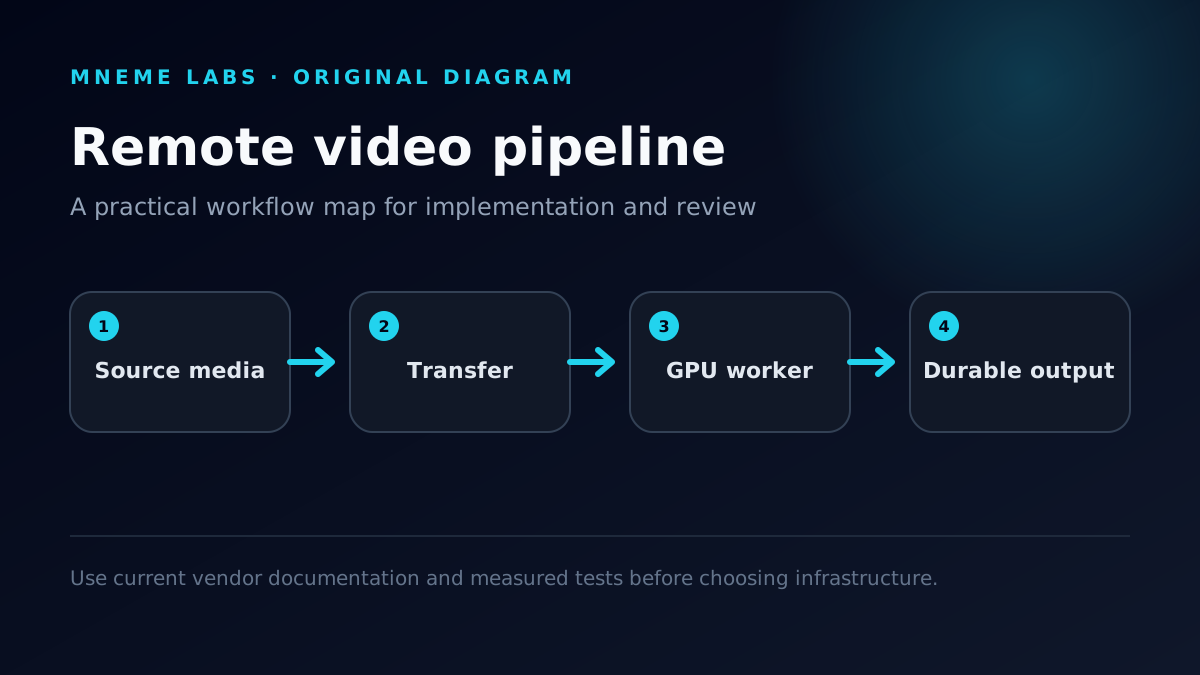
A system-level explanation of storage, job queues, GPU workers, checkpoints, and review in a remote AI video pipeline.
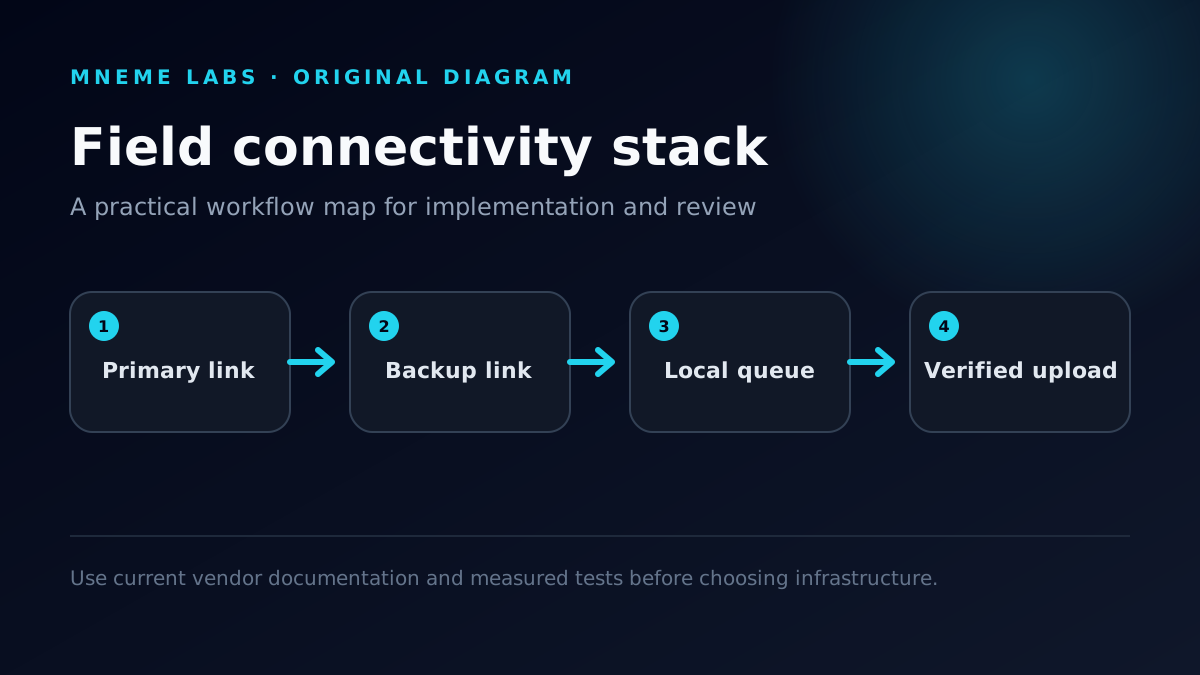
Design a practical mobile connectivity stack for uploads, livestreams, remote AI jobs, and field production without pretending one carrier or one connection can cover every failure.
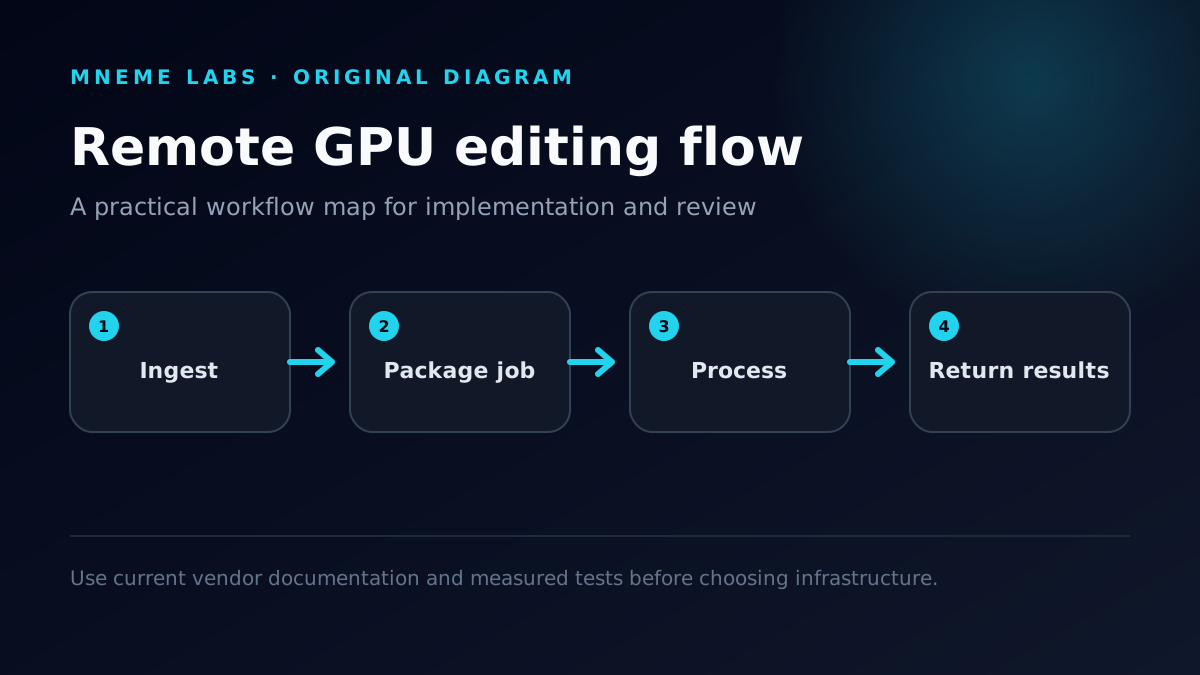
Where an on-demand GPU can extend a local AI video workflow, what it cannot fix, and the measurements to collect before calling it cost-effective.
That was my life: the physical grind of riding, followed immediately by the mental grind of freelancing. I treated my business like a hamster wheel.

For years, I tried to force myself into one box or the other. I was either a rider trying to edit video until 3 AM, or an engineer staring at code while ignoring my bike gathering dust in the garage.

I'm Billy, and I spend my weekends tearing up dirt tracks on a BMX bike and my weekdays building AI infrastructure that scales businesses. I didn't learn this by watching other people; I learned it by shipping.

In 2026, Instagram isn't just a photo grid; it's a high-velocity content engine where attention is the only currency that matters. If you aren't leveraging automation to outpace the noise, you're already dead in the water.

If you're still trying to manually script, film, and edit three videos a day while running a business, you're already behind. I ride BMX for a living, but my real grind is engineering the systems that let me dominate the algorithm without burning out.

Now, I measure them by the number of autonomous workflows running while I sleep. The transition from professional BMX rider to AI engineer wasn't a career pivot; it was a transfer of physics.

In the BMX world, you don't get paid for trying; you get paid for landing the trick cleanly and getting out of the way so the camera can keep rolling. The same logic applies to selling AI automation services today.

If you stop pedaling, you fall. The same rule applies to running a business in 2024.

When you're riding, there's no room for hesitation. You hit the ramp, you commit, or you crash.

It sounds like a split personality, but the logic is identical: you find the friction points, you strip away the unnecessary weight, and you optimize for speed and precision. In BMX, that means shaving grams off the frame.

By day, I'm knee-deep in code building the backend for OpenClaw, helping three distinct brands scale without burning out their teams. By weekend, I'm ripping dirt tracks on my BMX bike, hunting for the perfect line and learning that if you don't commit to the jump, you crash.

The full content workflow — film, ingest, transcribe, extract clips, caption, thumbnail, and post — can run automatically with AI agents. Here's the complete pipeline architecture and code.

RIFE (Real-time Intermediate Flow Estimation) can double or quadruple the frame rate of any video using AI-generated intermediate frames. Full Python pipeline for 24fps → 60fps conversion.

Cursor, Kiro, and VS Code Copilot each take a different approach to AI-assisted coding. Here's a technical breakdown of the differences — plus how to control any of them programmatically via Chrome DevTools Protocol.

A real comparison of AI upscaling (Real-ESRGAN, SwinIR) vs classical methods (Lanczos, Bicubic) with PSNR/SSIM benchmarks, code examples, and guidance on when to use each.

Build a Python auto-cut pipeline: YOLO26 scores the action, Whisper adds word-level captions, ffmpeg exports clips. Model sizing, tuning, and fixes.

Build real-time hand tracking with 21-landmark detection and SLAM-based environment mapping using MediaPipe and Open3D. Complete Python implementation for AR/VR spatial interactions.
Build an affiliate blog with AI that survives review: research real demand, write from evidence, disclose properly, tag links, and avoid Google's spam traps.

Generate complete game level layouts, tile maps, and environment scripts using local LLMs and procedural algorithms. Export directly to Godot, Unity, or Unreal. Zero API costs.

Generate complete landing page wireframes, logo concepts, and UI mockups from text descriptions using AI. Export to Figma JSON, React components, or static HTML — no Photoshop required.

Playwright gives you programmatic browser control over any social media platform — even ones without public APIs. Here's how to build a multi-account posting system that handles Instagram, TikTok, Facebook, and YouTube from a single Python script.

MusicGen from Meta generates original music from text descriptions — 'lo-fi hip hop 120bpm with rain sounds' becomes an actual audio file. Full setup guide, model comparison, and Python integration code.

# How to Build a YouTube Shorts Pipeline With AI I don't have time to edit videos. My hands are dirty from tuning bike bearings, or I'm out on the track trying to land a new trick for my next spon...

OpenAI's Whisper model runs entirely locally — no API key, no per-minute fees. This guide covers every model size, GPU acceleration, accuracy tips, and how to integrate it into a video processing pipeline.

Extract vocals, drums, bass, and instruments from any song in minutes using Meta's Demucs model. Complete Python walkthrough with real code, GPU tips, and quality benchmarks.

Manual lead research takes hours. AI-assisted scraping and enrichment can generate 300+ qualified leads per month with minimal human time. Full pipeline: target identification → scraping → enrichment → CRM export.

OpenClaw Skills are modular instruction packages that give your AI agent new capabilities — from camera control to email automation to social posting. Learn how the skill system works and how to install from ClawHub.

The omni_physics_simulation module brings compiled C++ physics to your AI game pipeline — rigid body dynamics, constraint solvers, and GPU-accelerated particle systems accessible from Python via pybind11.

Generate 3D meshes from text prompts entirely on your local GPU using OpenAI's Shap-E model. Export to OBJ, GLB, STL — no API key or internet connection required.

Generate clean SVG vector graphics from text prompts using diffusion models + vectorization pipelines. No Illustrator, no manual tracing — fully programmable vector output.

Hands-on comparison of OpenAI TTS, ElevenLabs, Coqui AI (local), Google Cloud TTS, and Azure Cognitive Services. Latency, quality, cost, and Python code for each.

An AI workspace centralizes every AI capability you use — video editing, music generation, code IDE, image tools — into a single cohesive environment. Here's why standalone tools aren't cutting it anymore.

# How to Use AI to Convert Blog Posts Into Pinterest Pins I spend my mornings grinding on dirt jumps and my afternoons debugging Python scripts. My life is split between the physical impact of lan...

Send hyper-personalized emails to thousands of subscribers without writing each one manually. AI agents make true 1-to-1 email marketing possible.

# How to Build a Content Pipeline That Runs Without You I spend my mornings hitting the dirt at the local skatepark and my afternoons debugging Python scripts. To most people, these two worlds don...

Stop drowning in support tickets. AI agents can resolve 80% of customer questions instantly while escalating complex issues to humans automatically.

Personalize cold email with AI the defensible way: legal basics, Gmail sender rules, evidence-backed research notes, validated drafts, human review, and follow-up limits.

Stop frantically scribbling notes and missing what people say. Let AI capture, summarize, and extract action items from every meeting automatically.

Stop wasting time on repetitive tasks. These 10 automations will save you 15+ hours per week and can be set up in a single afternoon.

Manual A/B testing took weeks per test. AI testing system now runs 20+ tests simultaneously—finding winners in days instead of months.

Running one AI agent is useful. Running seven coordinated agents is transformative. Here's how to orchestrate multiple AI agents that work together seamlessly.

Everything you need to know about AI agents as a content creator, from basic concepts to your first automation. No tech background required.

My AI agent creates 15 Pinterest pins daily from my blog content and posts them automatically. Zero manual design. 47K monthly Pinterest visitors.

I shoot for 20 minutes. My AI agents handle the rest: editing, subtitles, thumbnails, titles, descriptions, chapters, and publishing. Here's the complete system.

Drowning in analytics data across 8 platforms. Built an AI dashboard that tracks everything automatically—now seeing patterns I missed in 5 minutes vs 3 hours.

Stop worrying about bugs slipping into production. AI agents can review code, identify issues, suggest improvements, and enforce standards automatically.

Manual competitor tracking took 4-6 hours weekly. AI analysis system now monitors 10 competitors automatically—complete competitive intelligence in 20 minutes.

Adapt one post for 10 platforms with AI: verified character limits, a validated adaptation script, UTM-tagged links, scheduling options, and API caps.

Plan 90 days of content with AI: set pillars and cadence, generate ideas as validated JSON, schedule by rule, and export a CSV Google Calendar imports.

Generic templates felt robotic and forced. Built AI-powered templates that learn my style—now creating on-brand content 5× faster with zero generic feel.

Managing content workflow manually took 8-12 hours weekly. AI workflow system now automates the entire pipeline—from idea to publish in 90 minutes.

Here's what I'm betting on for the next 12 months in AI content creation. Some of these predictions will make me look stupid. Others will make you rich if you act early.

Writing email sequences took days. AI sequence generator now creates 7-14 day nurture sequences in 20 minutes—converting 3× better than my manual emails.

My AI research system generates 500+ validated content ideas monthly and identifies trending topics 2-3 weeks before they explode. Never stare at a blank page again.

I went from spending 4 hours per newsletter to 15 minutes using AI automation. Here's my complete system for writing, scheduling, and sending newsletters that get 40%+ open rates.

I used to spend 15 minutes per Instagram caption. Now I batch-write all 21 captions for the week in under an hour using AI. Here's my complete system for scroll-stopping captions that get engagement.

Writing comprehensive 5,000+ word guides took me 3-4 days. Now AI helps me create deeply researched, well-structured long-form posts in 45 minutes that rank #1 on Google.

I spent 2-3 hours writing show notes per episode. Now AI generates complete show notes, timestamps, quotes, and SEO summaries in 8 minutes automatically.

I spent hours creating SEO briefs manually. Now AI generates comprehensive, data-driven content briefs in 8 minutes—complete with keyword clusters, competitor analysis, and optimization guidelines.

My AI system helps me create 30 short-form videos per week across TikTok, Reels, and Shorts. Here's the complete strategy for ideation, scripting, editing, and posting.

Writing Twitter threads took 2-3 hours. AI thread generator now creates viral-worthy threads in 10 minutes—using proven formulas that get thousands of impressions.

My AI system creates 90 tweets and 12 threads per week, scheduled automatically. Here's how I grew from 2,400 to 34,000 followers in 7 months using AI.

I generate 50+ custom images per week for my content in minutes, not hours. Here's the complete guide to AI image generation for blog posts, social media, thumbnails, and more.

Building landing pages took 4-6 hours. AI landing page generator now creates fully optimized pages in 15 minutes—converting 2× better than manual pages.

Manual SEO took 4-5 hours per post. AI SEO automation now handles keyword research, content optimization, and tracking—ranking for 100+ keywords automatically.

Scheduling posts daily took 30-45 minutes. AI scheduling system now schedules 90 days of content in 2 hours—with perfect timing optimization.

Writing was slow and I always second-guessed myself. Built an AI writing assistant that helps in real-time—now writing 3× faster with better quality.

I built an AI sub-agent that researches, outlines, writes, and optimizes blog posts completely autonomously. Here's how to build your own blog writing agent from scratch.

I had 15 different tools and workflows. Now one AI-powered system handles everything—blog, video, social, email, podcast—all from a single content piece.

Run a content batch day with AI: size the batch to your real capacity, prep the inputs, work in blocks, apply quality gates, and follow AI-disclosure rules.

One-size-fits-all content was underperforming. Built AI personalization that adapts content to each visitor—conversions jumped from 3% to 11%.

I was spending $200+/month on OpenAI API costs. Now I run AI models locally for $0/month. Here's how to set up local AI models that match cloud quality without the subscription fees.

Step-by-step guide to building an AI agent that researches, writes, optimizes, and publishes blog posts autonomously. My agent publishes 3 posts/week with zero manual work.

Every morning at 6:47 AM, my phone buzzes with everything I need to know for the day. No apps to check. No scrolling. Just actionable intelligence in one text message.

My AI agent uploads 4-6 YouTube videos weekly with optimized titles, descriptions, tags, and thumbnails. Zero manual uploading. Here's the complete system.

My AI agent reads 200+ sources daily, filters for what matters, and sends me a 3-minute digest at 7 AM. Zero manual news checking. Always informed.

My AI agent reads my drafts, analyzes past posts, and accesses research notes automatically. Here's how to safely give your agent local file access without compromising security.

Generic AI content sounds robotic. I trained AI on my actual writing style and now it produces content that sounds exactly like me—readers can't tell the difference.

My AI agent does 40 hours of SEO research weekly—analyzing keywords, tracking competitors, finding content gaps, and delivering actionable insights. Here's the complete system.

I was drowning in 100+ DMs and comments daily. Now AI helps me reply to everyone personally in 20 minutes—boosting engagement 340% while saving 3+ hours per day.

I was drowning in analytics data with no insights. Now AI analyzes my content performance in 5 minutes and tells me exactly what to do next. Here's the complete system.

I built a professional media kit in 45 minutes using AI that landed $23K in sponsorships in 60 days. Here's how to create yours without design skills.

I run a $18K/month AI-powered ghostwriting service for 12 creators. Here's my exact system for delivering high-quality content at scale while maintaining each client's unique voice.

I conducted 24 expert interviews in 3 weeks using AI for research, question generation, and transcription. Here's how to interview SMEs at scale without losing quality.

Creating fresh content for every platform was killing me. Built an AI repurposing system—now turning 1 blog post into 30+ platform-specific pieces in 15 minutes.

Manually checking for brand mentions across platforms took hours daily. AI social listening now monitors everything automatically—caught opportunities I would have missed.

You don't need expensive subscriptions to use AI. Here are 15 completely free AI tools I use daily for content creation, automation, and productivity—$0/month, professional results.

Every AI tool, workflow, and system I use to run a 6-figure creator business in 15 hours/week. Nothing held back. This is my complete AI toolkit with exact costs, alternatives, and why I chose each one.

Everyone's confused about the difference. This simple guide explains what separates passive chatbots from autonomous AI agents—and why it matters for your business.

My AI agent tracks 23 competitors 24/7, analyzing their content, performance, and strategy. Here's how I stay ahead without manual stalking.

I increased my CTR from 3.2% to 8.7% using AI-generated thumbnails. Here's my complete system for creating scroll-stopping thumbnails in under 5 minutes each.
Stop manually creating financial reports. AI agents can track revenue, expenses, cash flow, and profitability while providing actionable insights automatically.

Stop limiting your business to English-speaking markets. AI translation agents can localize content, handle customer support, and manage multilingual operations automatically.

Stop manually stalking competitors. AI agents can monitor pricing changes, product updates, marketing campaigns, and content strategies automatically.

Stop losing track of information. AI agents can capture, organize, connect, and surface knowledge automatically—building a searchable second brain.

Single AI agents are powerful. But chaining multiple agents together creates workflows that handle entire processes end-to-end automatically.

AI agents are powerful but introduce new risks. Learn how to secure your agents, prevent failures, and build safety mechanisms into your automation.

We need to write a 950-word first-person blog post titled 'How to Train Your AI Agent on Your Own Data'. Voice: Billy, a BMX rider and AI engineer who built an AI agent called OpenClaw that runs his 3 brands automatically.

We need to write a 950-word first-person blog post titled 'How to Build a Content Drip System With AI Agents'. Voice: Billy, a BMX rider and AI engineer who built an AI agent called OpenClaw that runs his 3 brands automatically.

**AI Agents vs AI IDEs — What’s the Difference**

Building a Multi-Agent Workflow for Your Business

**How to Give Your AI Agent Long‑Term Memory**

We need to produce a 950-word first-person blog post titled 'How to Build a Lead Generation AI Agent From Scratch'. Voice: Billy, a BMX rider and AI engineer who built an AI agent called OpenClaw that runs his 3 brands automatically.

We need to write a 950-word first-person blog post titled 'How to Set Up Your First AI Agent in Under an Hour'. Voice: Billy, a BMX rider and AI engineer who built an AI agent called OpenClaw that runs his 3 brands automatically.

If you’re still manually prompting a chatbot to draft your newsletter, then copying that text into a scheduler to post on LinkedIn, you are already behind. The creator economy in 2026 isn’t about who...