AI voice generation becomes useful when it is treated as a controlled production stage, not a button that turns a rough draft into finished narration. ElevenLabs can supply speech generation and dubbing capabilities, but the surrounding workflow determines whether the output is accurate, authorized, and maintainable.
This is a conceptual production guide, not a claim that Mneme Labs has completed a broad ElevenLabs quality benchmark.

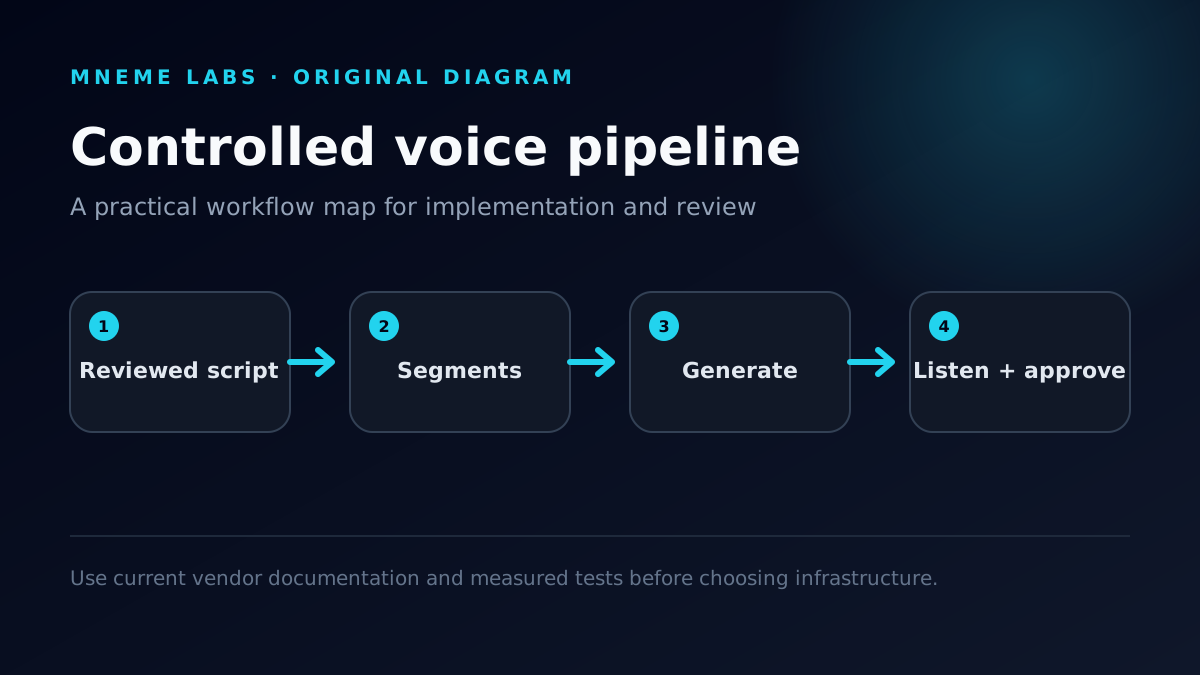
Lock the script before final generation
Generating final audio from an unstable script creates unnecessary cost and version confusion. Research, factual review, and structural editing should happen before the final voice pass.
The script should separate spoken text from production notes. Numbers, names, acronyms, URLs, and technical terms deserve explicit review because a natural-sounding voice can pronounce a wrong answer confidently.
For long work, split the script into stable segments with identifiers such as intro-01, section-gpu-02, and outro-01. Those identifiers should carry through the audio filenames and editing timeline.

Consent is part of the asset
If a workflow uses a cloned or custom voice, authorization should be documented and stored with the project. The consent record, permitted uses, duration, and revocation process should be clear before generation begins.
Do not imitate a recognizable person because the model makes it possible. Technical capability does not create permission.
Build a pronunciation layer
Every recurring channel develops its own vocabulary: names, brands, locations, product codes, and domain-specific terms. Maintain a pronunciation list instead of correcting the same mistake manually in every episode.
A good entry includes the written form, preferred spoken form, context, and a reviewed example. The pipeline can preprocess approved replacements or pass pronunciation controls when the service supports them.

Generate segments, not one giant file
Segmented generation makes review and revision cheaper. If one fact changes, regenerate that segment rather than the entire narration. Stable settings and filenames make it possible to replace the clip without rebuilding the edit from scratch.
Each generated segment should retain:
- script version and segment ID;
- voice identifier and authorization reference;
- model and relevant settings;
- generation date;
- review status;
- final audio checksum or version.
That metadata turns generated audio into a traceable production asset.
Review by listening
Waveforms and transcripts cannot detect every voice problem. Listen for pronunciation, pacing, emphasis, clipped words, unnatural breaths, repeated phrases, and tone that conflicts with the subject.
Review the assembled narration against the actual edit. A sentence that sounds fine alone may be too long for a visual sequence or may emphasize the wrong beat.

For multilingual dubbing, fluent speakers should review meaning and cultural context. Translation quality and voice quality are separate checks.
Add automation after the review points work
An agent can watch for an approved script, split it into segments, generate drafts, name files, update a manifest, and notify an editor. It should not silently publish audio because an API returned success.
Useful states include draft, generated, needs review, approved, rejected, and published. A changed script should invalidate only the affected approved segments and make the revision visible.
Measure the workflow, not only voice quality
Track regeneration rate, minutes of approved audio per hour of work, character usage, pronunciation failures, editorial corrections, and the percentage of segments accepted on the first pass.
A beautiful voice that requires constant manual repair may be a worse production choice than a less dramatic voice with stable pronunciation and predictable editing.
Where ElevenLabs fits
ElevenLabs can occupy the generation layer between an approved script and an audio review queue. Mneme or another content system can manage source material, scripts, assets, status, and delivery around it.

That separation avoids vendor lock-in at the workflow level. The voice provider can change while the script manifest, review process, filenames, and publishing pipeline remain stable.
Read the ElevenLabs workflow guide, compare voice cloning and TTS engines, or see the complete AI infrastructure map.