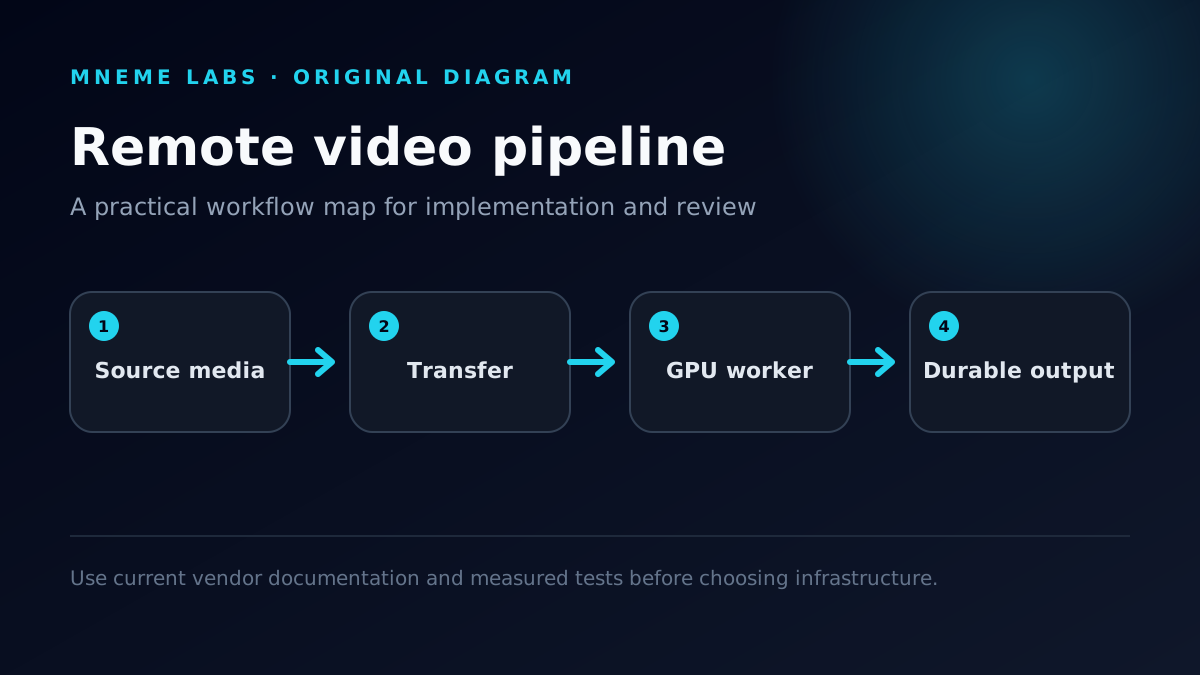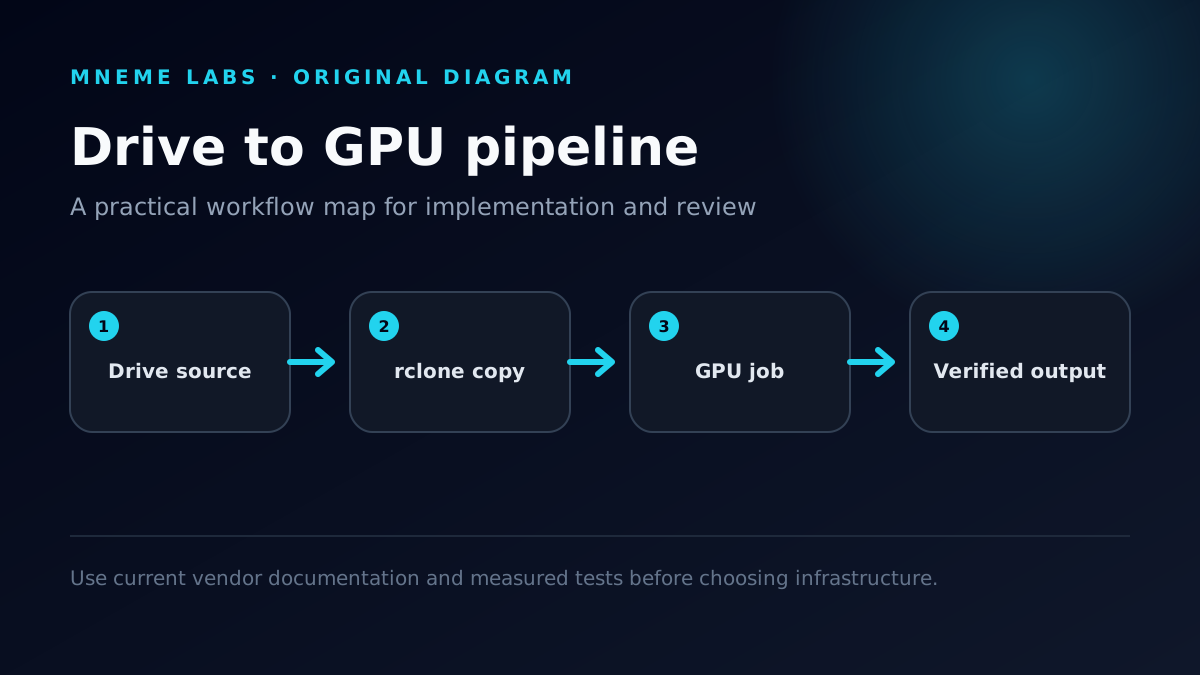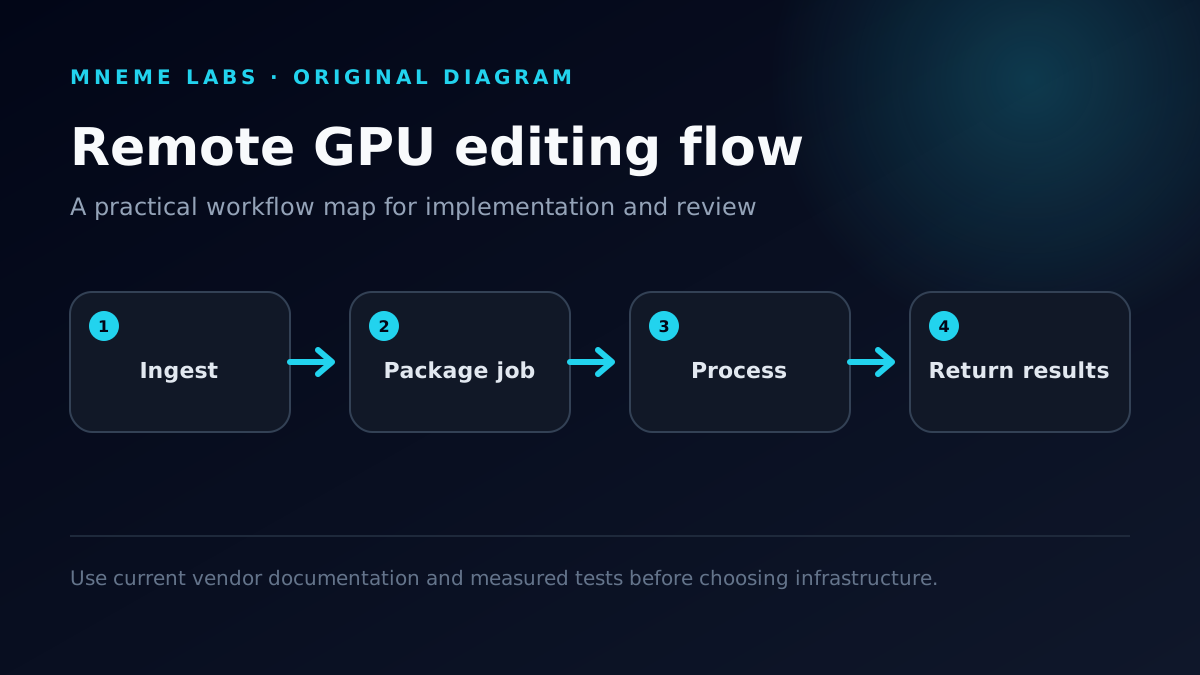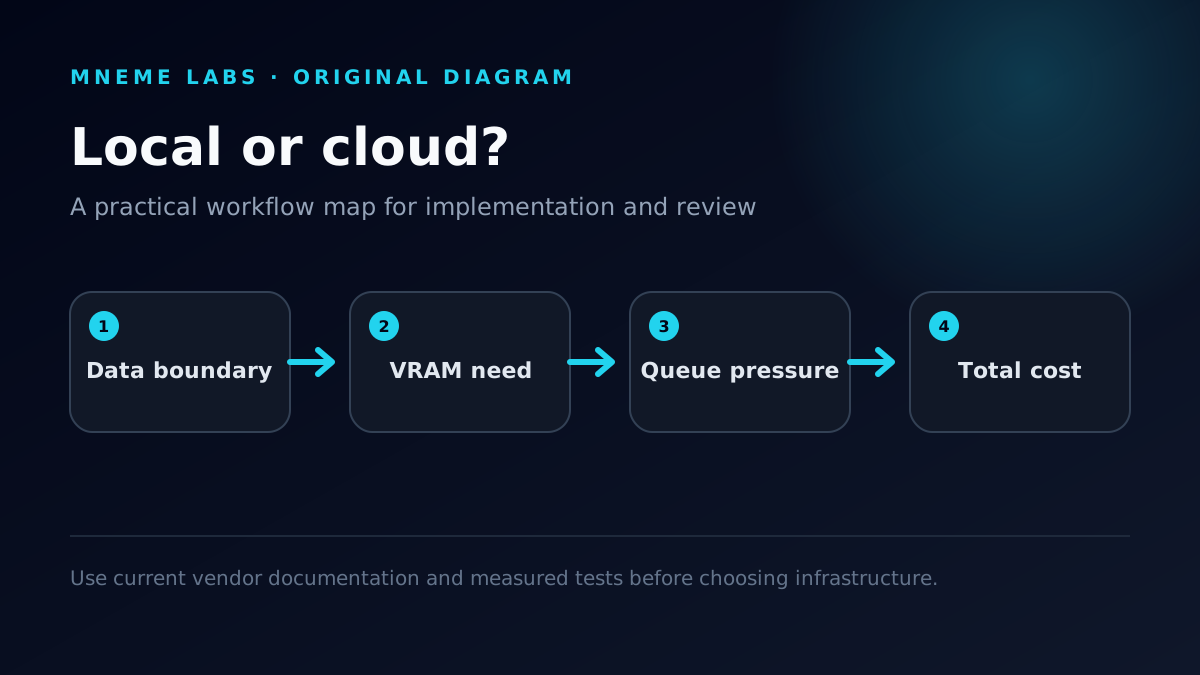
The argument between a local RTX 3090 and a cloud GPU is usually framed as if one must win. In practice, they solve different capacity problems. The better question is: which workload should run where, under what constraints, and with what measured cost?
Mneme Labs uses a local RTX 3090 as a working baseline. The cloud side of this comparison remains an evaluation framework until the same jobs are run under documented conditions.

What local ownership buys
A local GPU provides immediate access to hardware you control. Source media does not need to cross the internet, exploratory runs do not start a new billing meter, and tools can interact directly with local storage and desktop applications.
That makes local compute attractive for:
- private photos, video, and client data;
- frequent iteration with small or medium jobs;
- visual workflows where moving large files is expensive;
- development that changes the environment repeatedly;
- work that benefits from direct access to cameras, disks, and creative applications.
Ownership still has costs. Purchase price, power, cooling, storage, maintenance, and queue time all matter. If one card is occupied for twelve hours, the next job waits unless it can run elsewhere.

What rented compute buys
Cloud GPUs turn hardware into variable capacity. A team can select a larger-memory card for one model, start multiple workers for a batch, or access compute while away from the local workstation.
That is valuable for:
- temporary spikes;
- infrequent workloads needing more VRAM;
- parallel jobs with clean boundaries;
- reproducible production workers;
- teams that cannot install or cool another workstation.
The variable bill is only one tradeoff. Data transfer, persistent storage, environment setup, idle resources, regional availability, and security review can change the result.
Compare complete job cost
For a meaningful test, begin the timer before the files move and stop it after verified outputs return. Track:

| Measurement | Local RTX 3090 | Cloud GPU |
|---|---|---|
| Compute time | Job runtime | Job runtime |
| Setup | Local environment maintenance | Image pull, startup, dependency setup |
| Data movement | Local disk reads and writes | Upload, download, mounted storage |
| Idle cost | Hardware exists whether used or not | Resources may bill until stopped |
| Scaling | Limited by owned hardware | Additional workers may be available |
| Privacy | Data can remain on premises | Requires approved third-party handling |
| Recovery | Local checkpoints and backups | Remote checkpoints and persistent outputs |
Cost per GPU hour is not cost per completed job. Failed runs and operator attention belong in the total.
VRAM can decide before speed does
Some models or resolutions simply do not fit into the available local VRAM without quantization, tiling, offloading, or other compromises. In that case, a larger remote GPU may be useful even if the local card has a lower effective cost for smaller jobs.
Before renting, confirm that VRAM is the actual bottleneck. Poor batching, unnecessary precision, oversized inputs, or a memory leak should not be hidden by a larger card.
Media workloads favor locality until they do not
Video and image pipelines often begin with large local assets. A local card can read them directly and write intermediate files without network transfer. That gives ownership a strong advantage for interactive editing and repeated experiments.

Remote compute becomes more attractive when the job is well-defined, source material is already in approved cloud storage, the required model exceeds local capacity, or parallel throughput matters more than transfer overhead.
A hybrid decision rule
Use local compute for private iteration, development, and repeat workloads that fit comfortably. Consider remote compute when a measured deadline, VRAM limit, travel requirement, or parallel batch justifies the operational overhead.
Do not migrate the whole pipeline because one stage needs a different GPU. Package that stage as a worker with explicit inputs and outputs. This keeps the local system useful and makes the rented portion easier to stop, replace, or benchmark.
Benchmark without marketing theater
A credible comparison publishes model versions, drivers, precision, batch size, input dimensions, source size, storage path, region, GPU, timing boundaries, failures, and total observed cost. It also distinguishes first-run setup from a warm repeated run.
Screenshots without those details prove only that a dashboard existed. A result without output-quality review may reward a fast but incorrect configuration.
Bottom line
The RTX 3090 is a strong local baseline because it combines useful VRAM with direct control of data and repeated workloads. A cloud GPU is strongest as elastic capacity for jobs that are reproducible, approved, and measured end to end.

The likely answer for Mneme is not replacement. It is a hybrid queue that sends the right job to the right compute layer.
Read the RunPod guide, learn how remote GPU video editing works, or compare the complete AI infrastructure stack.