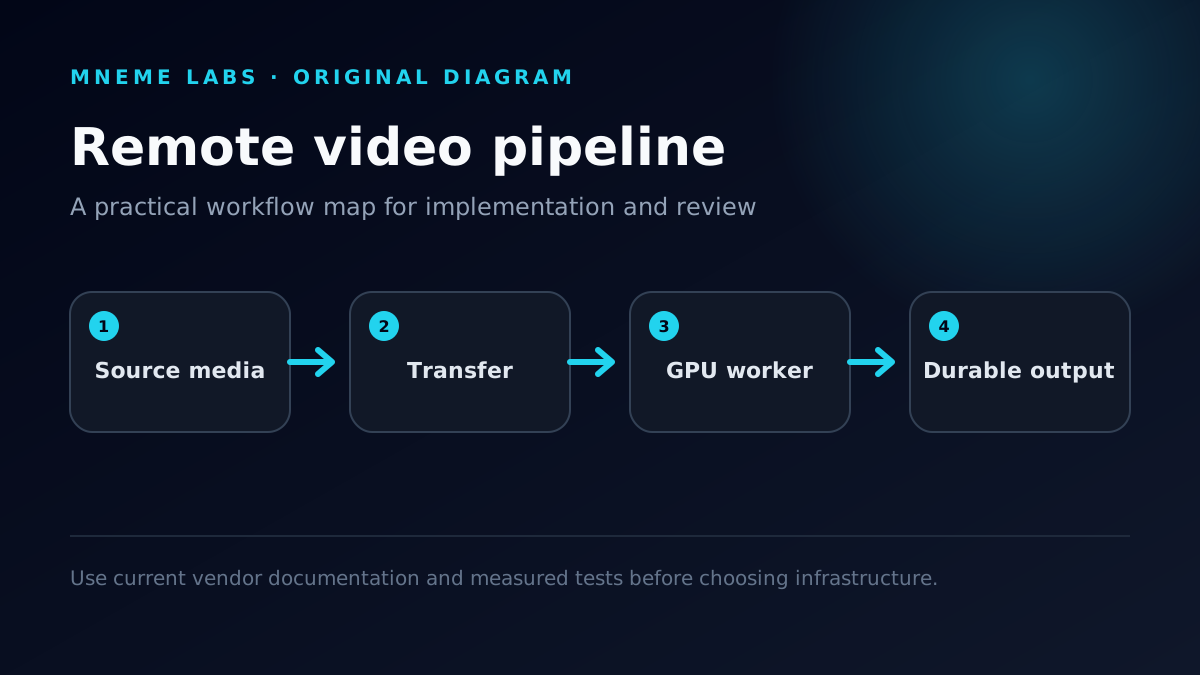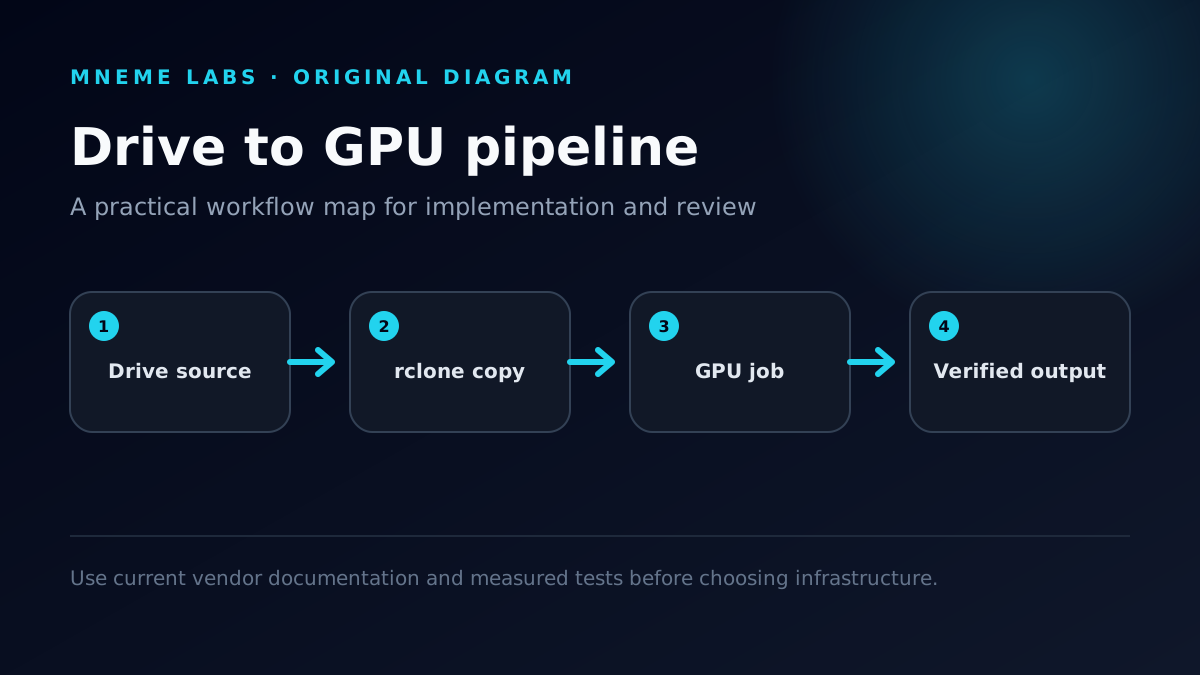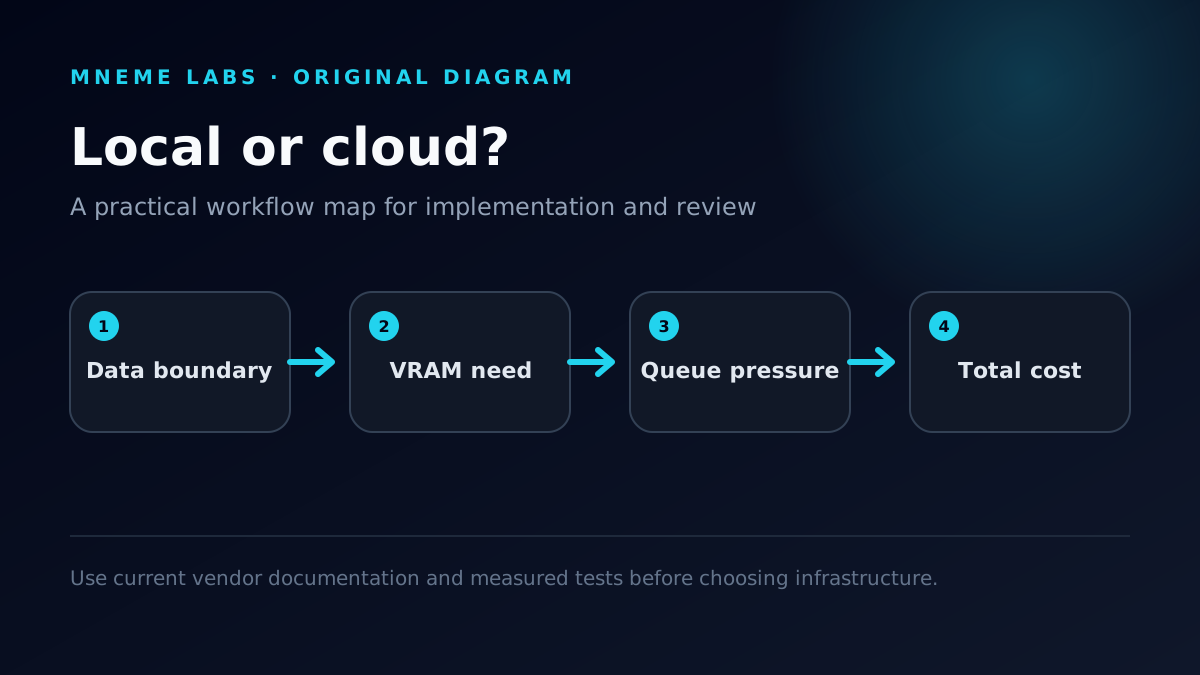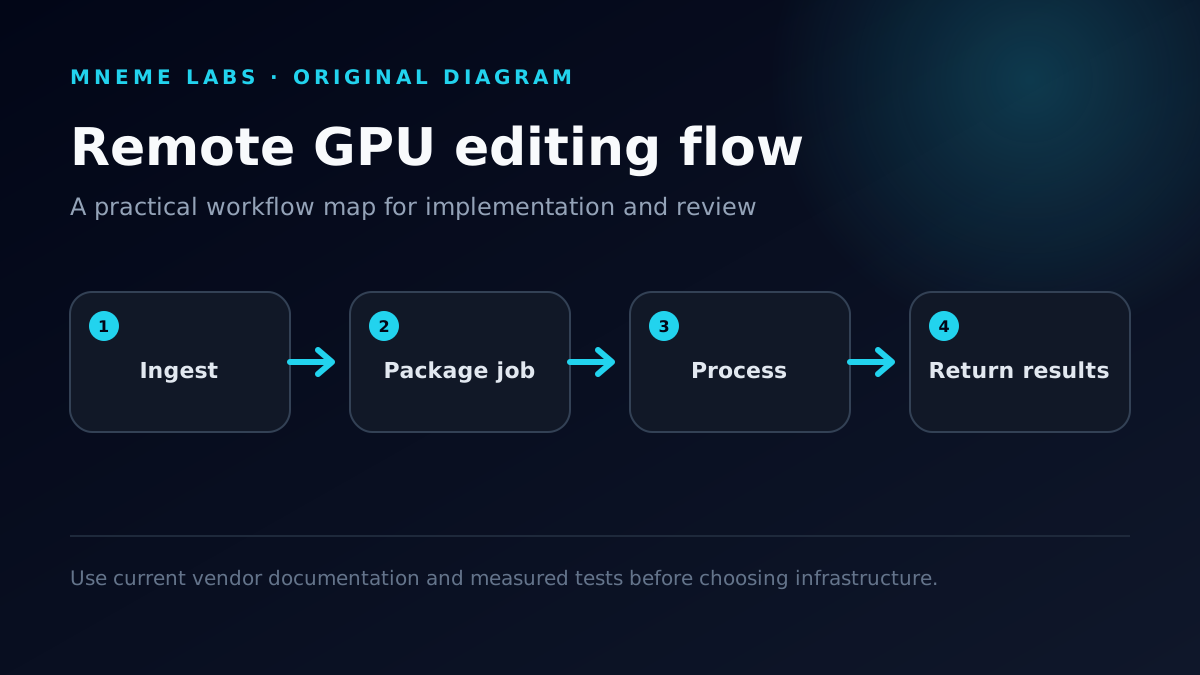
Remote GPU video editing does not mean streaming a full editing desktop from a distant machine and hoping latency behaves. The more reliable pattern treats the GPU as a worker in a job system. The editor or agent submits a defined operation, the worker processes approved media, and the result returns with logs and metadata.
The five parts of the system
A durable remote pipeline usually has five layers:

- Source storage for original footage and backups.
- A job manifest describing the input, operation, model, settings, and output.
- A queue or dispatcher that assigns work and records state.
- A GPU worker with a reproducible environment.
- Review and delivery that verifies the output before publication.
The GPU is important, but it is only one piece. Most production failures occur at the boundaries: missing codecs, inconsistent filenames, expired credentials, full disks, partial uploads, and workers that disappear before output reaches persistent storage.
Start with a job manifest
The manifest turns an editing request into something a machine can execute and a human can audit. For example, an interpolation job might identify:
- a stable job ID;
- the exact source asset and checksum;
- source frame rate and target frame rate;
- model and version;
- output codec and location;
- checkpoint interval;
- retry policy;
- who requested and approved the job.
This is safer than a folder named final_final_v2 and a command remembered by one operator.

Move only what the worker needs
Uploading an entire project archive for one shot wastes time and expands the security scope. A preprocessing step can select the approved clips, generate proxies, or split a long source into independent segments.
The right approach depends on the model. Upscaling and interpolation often require full-quality frames. Transcription may need only audio. Object detection might run against proxies during search, then revisit the original frames for the final export.
Design data movement around the operation instead of treating every job like a complete project migration.
Make the GPU worker disposable
A remote worker should be reproducible from version-controlled configuration. It needs pinned packages, model identifiers, codec support, health checks, and a predictable entry command. Secrets arrive at runtime rather than being baked into the image.

The worker reads one job, reports progress, saves checkpoints, writes verified output to persistent storage, and exits or accepts another job. If the instance disappears, the system should know which work completed and which work can resume.
Disposable compute is only useful when results are not disposable.
Separate processing from review
An AI-generated edit is not complete because the command exited successfully. Video needs technical and editorial review.
Technical checks can validate duration, resolution, frame rate, codec, audio presence, file size, and decode errors. Model-specific checks might identify duplicate frames, visual artifacts, bad segmentation edges, subtitle timing, or missing detections.
Editorial review asks whether the result is actually usable. Did interpolation distort fast motion? Did a vertical crop lose the obstacle? Did an upscaler invent texture? Did the cut preserve the action?

The worker can automate checks. A person or trusted review system still decides whether the asset ships.
Retries must be safe
A retry should not publish twice, overwrite a reviewed file, or charge for the entire job when one segment failed. Stable job IDs and idempotent output paths make it possible to retry only incomplete work.
For a segmented video, each part can checkpoint independently. The assembly step runs only after every required segment passes validation. If one worker fails, another can resume from the last verified checkpoint.
Measure transfer and idle time
Remote GPU marketing naturally emphasizes compute speed. A production measurement includes queue delay, worker startup, image pulls, model downloads, media transfer, processing, validation, output transfer, and shutdown.
The most expensive failure may be an idle GPU waiting for a manual step. Automate shutdown based on completed jobs and monitoring, but preserve enough information to diagnose failures before deleting the environment.
A local-plus-remote Mneme architecture
Mneme can perform search, organization, approval, and lightweight processing near the local media library. A dispatcher can send an approved heavy operation to remote compute using a narrow manifest. The result returns to local or durable project storage and enters the same review workflow as a local render.

That architecture preserves the strengths of local visual memory while adding burst capacity. It also creates a clean boundary for cost measurement and access control.
What should be tested before production
Test one representative clip from upload through verified return. Interrupt the worker. Expire a credential. Fill the temporary disk. Submit the same job twice. Confirm that the system reports useful state and does not lose or duplicate output.
Only then scale to a long sequence or parallel batch.
Continue with RunPod for AI video workflows, the RunPod decision guide, or Cloud GPU vs Local RTX 3090.