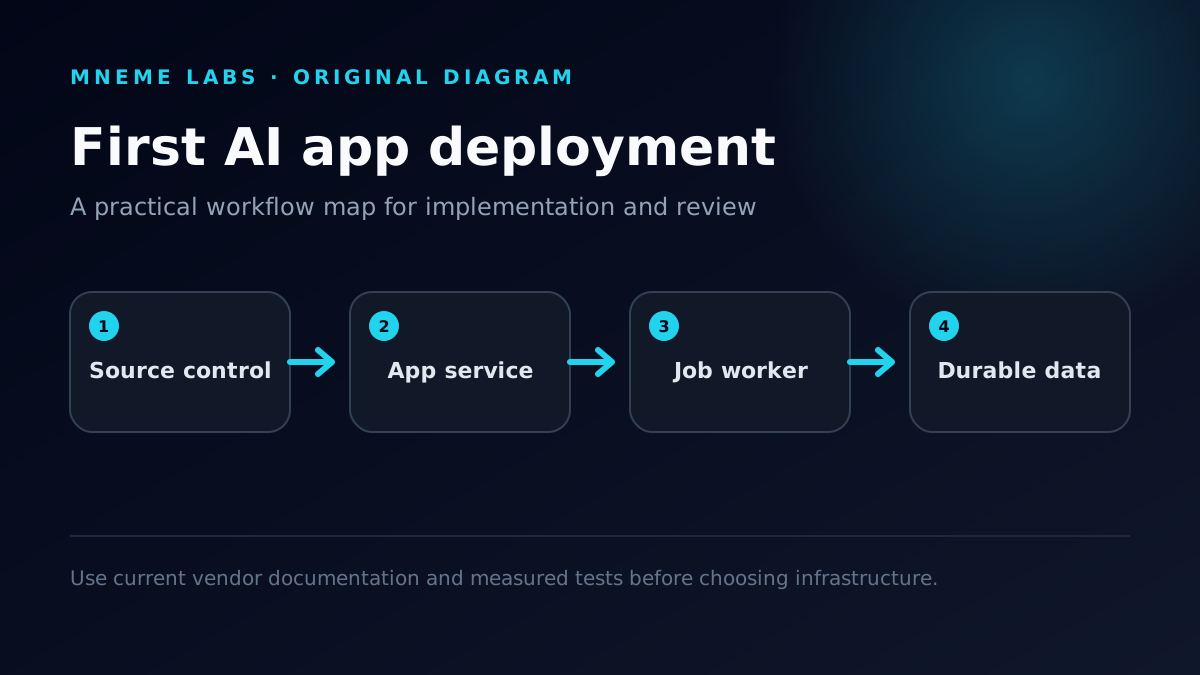
Putting an AI API on a cloud server is easy enough to demonstrate. Keeping it secure, observable, recoverable, and affordable is the actual engineering work. Vultr can provide the server layer, but no infrastructure provider can decide where your request path ends, how jobs recover, or who owns a failed deployment.
This guide describes the architecture Mneme Labs would expect before calling a deployment production-ready. It is not a claim that a specific Vultr plan has already been benchmarked.

Keep expensive work out of the web request
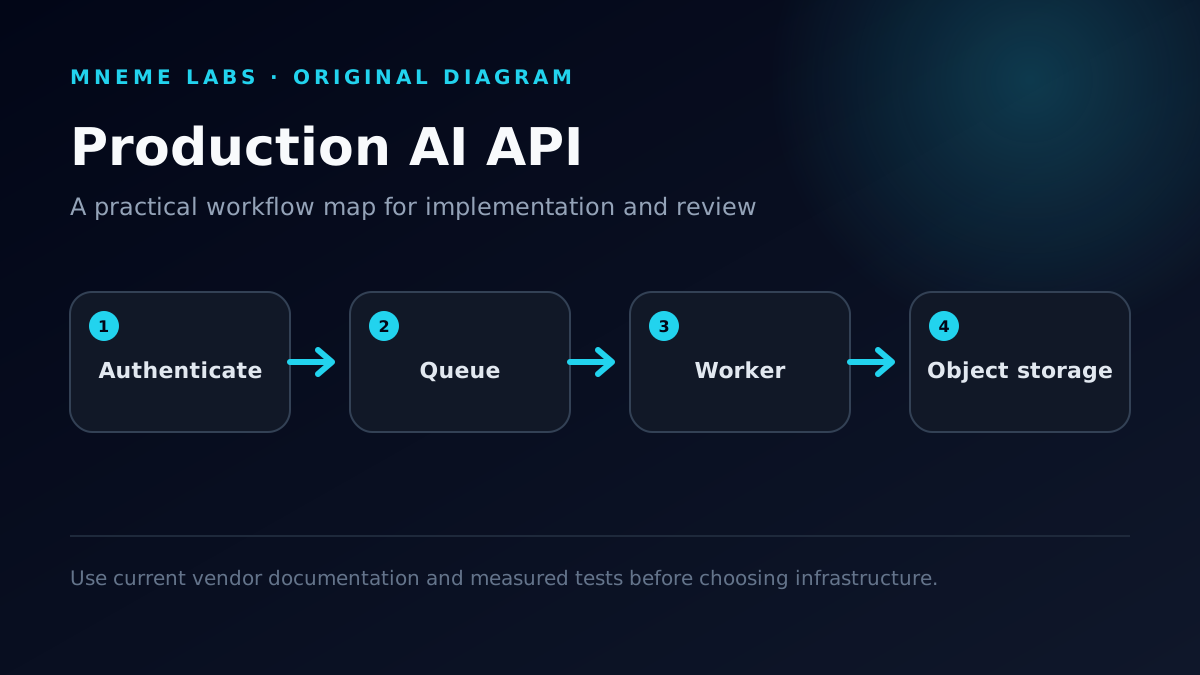
A web request should authenticate the caller, validate the job, record it, and return a stable identifier. Long inference, rendering, indexing, or media processing belongs in a worker queue.
Holding an HTTP request open while a model runs creates avoidable failure. Browsers disconnect, proxies time out, workers restart, and clients retry. Without job IDs and idempotency, one retry can create duplicate expensive work.
A durable flow is:

- Client submits a request with an idempotency key.
- API validates access, inputs, size, and quota.
- Database records the job and returns its ID.
- Worker claims the job and reports progress.
- Output moves to durable storage.
- Client retrieves status or receives an approved notification.
Make deployment reproducible
Do not configure production by typing undocumented commands into one server. Use a container, deployment script, or configuration system stored with the application. Pin important versions and make rollback possible.
Environment variables and secrets should arrive through a secure runtime mechanism. They do not belong in the repository, container image, shell history, or client-side bundle.
Restrict the network surface
Expose only the services that need public access. Administration should use key-based authentication and restricted sources where practical. Databases, queues, and model workers usually should not accept arbitrary internet traffic.
TLS, authentication, authorization, request-size limits, and rate limits are separate controls. A valid HTTPS certificate does not prevent an authorized user from exhausting an unbounded inference endpoint.

Add health checks that mean something
A process can be running while the application is unusable. Health checks should distinguish basic process availability from readiness to serve real work.
Useful checks can cover database connectivity, queue access, required storage, model availability, and disk space. Avoid a health route that performs a costly inference every few seconds.
Observe jobs and resource pressure
Structured logs should include request or job IDs without dumping secrets or private input. Measure latency, error rate, queue depth, worker duration, memory, CPU, disk, bandwidth, and external API failures.
Alerts should point to an action. “CPU is high” is less useful than “queue age exceeded the delivery target while every worker is occupied.”
Plan for failure before backups
A backup file is not a recovery plan until restoration has been tested. Define what must be backed up, how much data can be lost, how long recovery may take, and who performs it.

Also plan application rollback. A database migration may make the previous code incompatible. Migrations need review, ordering, and a recovery path rather than assuming every deploy moves only forward.
Separate CPU hosting from GPU inference
The API, database, queue, and lightweight workers may fit conventional servers even when heavy inference needs a GPU elsewhere. Separating these layers prevents the public application from depending on one expensive machine.
The API can dispatch a job to local compute, a rented GPU, or a specialized service based on policy. That makes compute replaceable and gives cost controls a clear boundary.
Control cost and abuse
Every job needs limits: input size, runtime, retries, concurrency, storage retention, and user quota. Stop retry storms. Expire abandoned uploads. Delete temporary outputs according to policy. Set provider budget alerts, but also enforce limits inside the application.
The bill should be attributable to workloads and users. If all spend appears as one unexplained server total, optimization becomes guesswork.
A sensible first production milestone
The first version does not need global orchestration. It needs one reproducible service, one durable job path, authentication, logs, health checks, backup and restore, rate limits, and a tested rollback.

Scale after real traffic reveals the bottleneck. Premature distributed architecture creates more failure modes than it solves.
Use the Vultr decision guide, compare DigitalOcean for a first AI deployment, or map the complete AI infrastructure stack.